Two Words You'll Hear Everywhere
If you spend any time reading about the Brandywine Festival — in the guides, on Discord, in conversations with other players — you will quickly encounter two abbreviations: IG and OOG. In-Game and Out-of-Game. Understanding the difference between them is probably the single most useful piece of knowledge a first-time attendee can have before they arrive. It shapes everything from where you camp, to what you wear, to how you behave when you need a break. The good news is that the concept itself is straightforward.
The Basic Idea
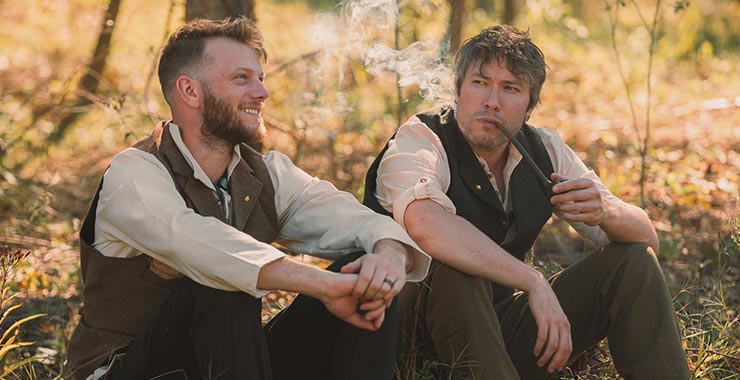
In-Game (IG) means: within the shared fiction. When you are in an In-Game space, you are your Hobbit character, the world around you is the Shire, and the year is 1418 of the Shire Reckoning. Everything visible in that space — tents, clothing, dishware, lighting, decorations — is chosen to support that illusion.
Out-of-Game (OOG) means: outside the fiction. When you are in an Out-of-Game space, you are yourself. You can speak in your normal voice, check your phone, wear your regular clothes, eat from a plastic container, and decompress from the experience of roleplay without breaking anything for anyone else.
Both spaces exist simultaneously on site, and you can move between them.
Why the Distinction Matters
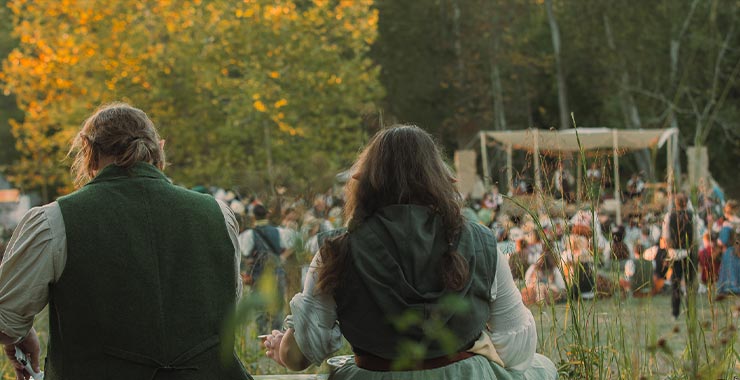
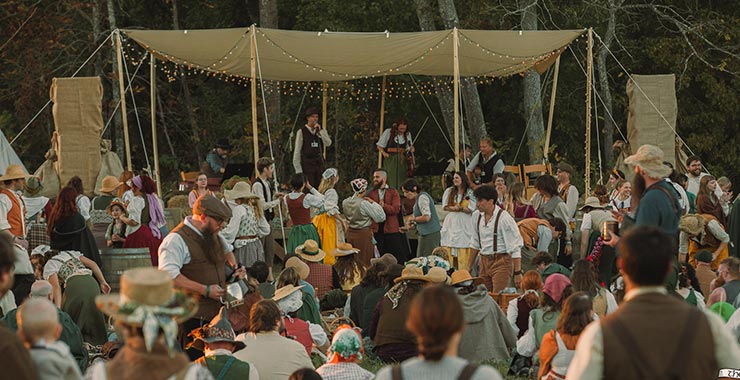
Immersive events live or die on the collective agreement of everyone present to maintain the fiction. When you walk through an In-Game camping area and every tent is canvas, every light is warm and amber, and every person you pass is dressed as a Hobbit going about their Hobbit life — the illusion holds. You genuinely feel, for a moment, like you have stepped into another world.
That feeling is fragile. A single bright neon dome tent, a glowing smartphone screen, or a conversation happening in modern slang can break it — not just for you, but for everyone nearby. The IG/OOG distinction exists to protect that experience, while also making absolutely sure that everyone has access to the practical, modern comforts they need. It is not about rigidity or gatekeeping. It is about making sure that the magic is available to everyone who wants it, while nobody feels trapped or uncomfortable.
What In-Game Looks Like
The In-Game areas of the Brandywine Festival are designed to be as immersive as possible. This means:
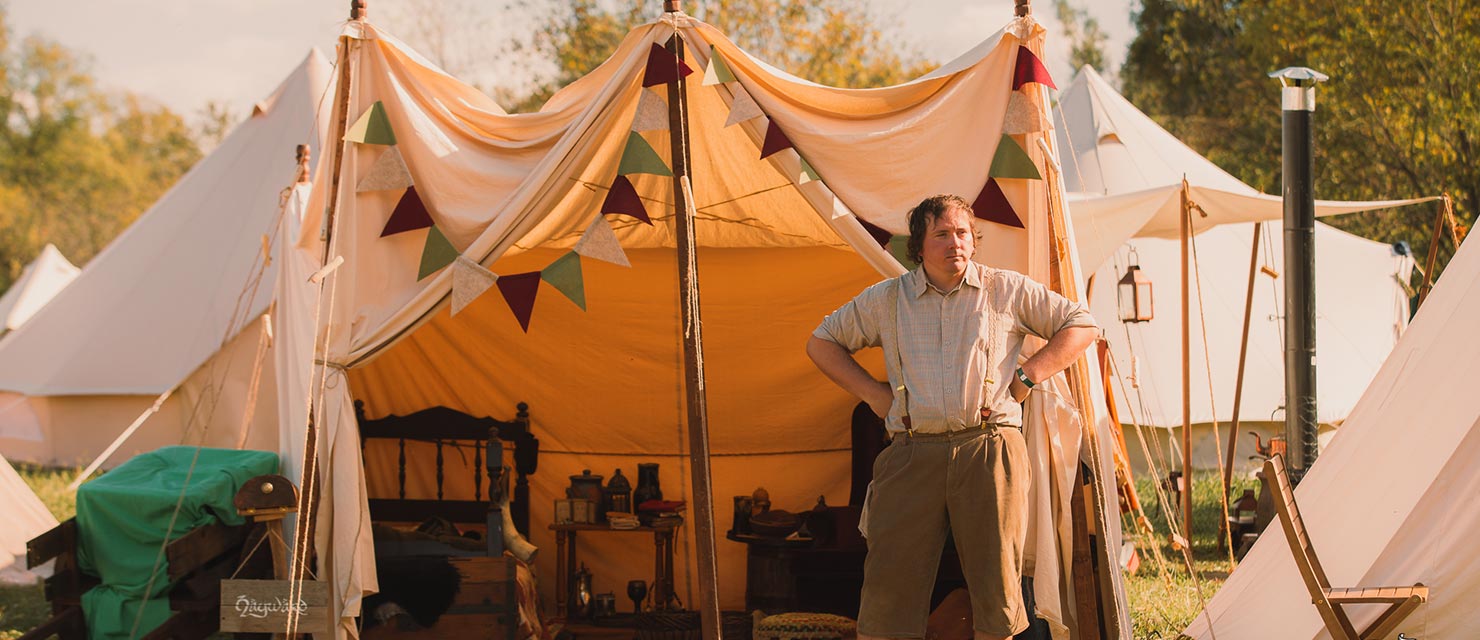
- Tents made from canvas or natural-looking materials in earth tones
- Lighting that is warm and amber — lanterns, battery-powered candles, soft string lights hidden in fabric or foliage
- Clothing that looks like it belongs in a pre-industrial English countryside
- Dishware that is wooden, ceramic, pewter, or enamel — not plastic
- Decor that tells the story of who your character is — bunting, wooden signs, potted herbs, small handmade objects
Modern items — phones, plastic coolers, synthetic sleeping bags — are welcome inside closed tents where they can't be seen. The goal is not to make your life uncomfortable. It is to ensure that what is visible contributes to the shared world.
What Out-of-Game Looks Like
The Out-of-Game camping area is, by contrast, entirely practical. Any tent goes. Any lighting goes. Modern cooking equipment, folding chairs, LED lanterns, dome tents in any colour — all of it is welcome here.
OOG campers can still participate fully in every In-Game activity. The only difference is that their home base is not visible from the immersive areas. You dress in your Hobbit costume to walk into the festival, and return to your modern camp when you need to recharge.
There are also Out-of-Game spaces within and adjacent to the In-Game areas — designated spots where you can drop character briefly without disrupting others. The Paramedics and the Outroom (a space for rest and mental health support) are always Out-of-Game by definition.
A Note on the OOG Signal
When you need to communicate something Out-of-Game while in an In-Game area — whether for safety, a quick practical question, or a personal need — the universal signal is crossed arms. Anyone with their arms crossed is indicating that they are, in that moment, speaking as themselves rather than as their character. Other players will recognise and respect this.
It is a small thing, but it makes a big difference. It means you are never truly trapped in-character. You always have a clean, clear way to step outside the fiction when you need to.
Choosing Your Camp Style
When you register for the Brandywine Festival, you will be asked whether you want to camp In-Game or Out-of-Game. This is worth thinking about in advance.
In-Game camping is for those who want to live fully inside the world — who want their tent, their campsite, and their morning cup of tea to all be part of the story. It takes more preparation (your gear needs to look the part), but the reward is an experience of immersion that is genuinely extraordinary.
Out-of-Game camping is for those who want maximum comfort and flexibility — who prefer to step cleanly in and out of character, or who are traveling light and don't want to invest in themed equipment. You lose nothing in terms of participation; you simply have a more modern home base.
Neither choice is better than the other. Both are equally valid ways to enjoy the event.
One More Thing
The IG/OOG framework is built on trust and generosity, not enforcement. The vast majority of the time, everyone maintains the distinction naturally — not because they're being watched, but because they genuinely want to contribute to something beautiful.
If you're unsure whether something is IG-appropriate, the best approach is simply to ask — on Discord before the event, or from a Game Master on site. Nobody will judge you for checking. The community around the Brandywine Festival is, by and large, the kind that would rather help you get it right than make you feel bad for getting it wrong.